Thursday, April 29, 2010

Thompson Park Rain Garden

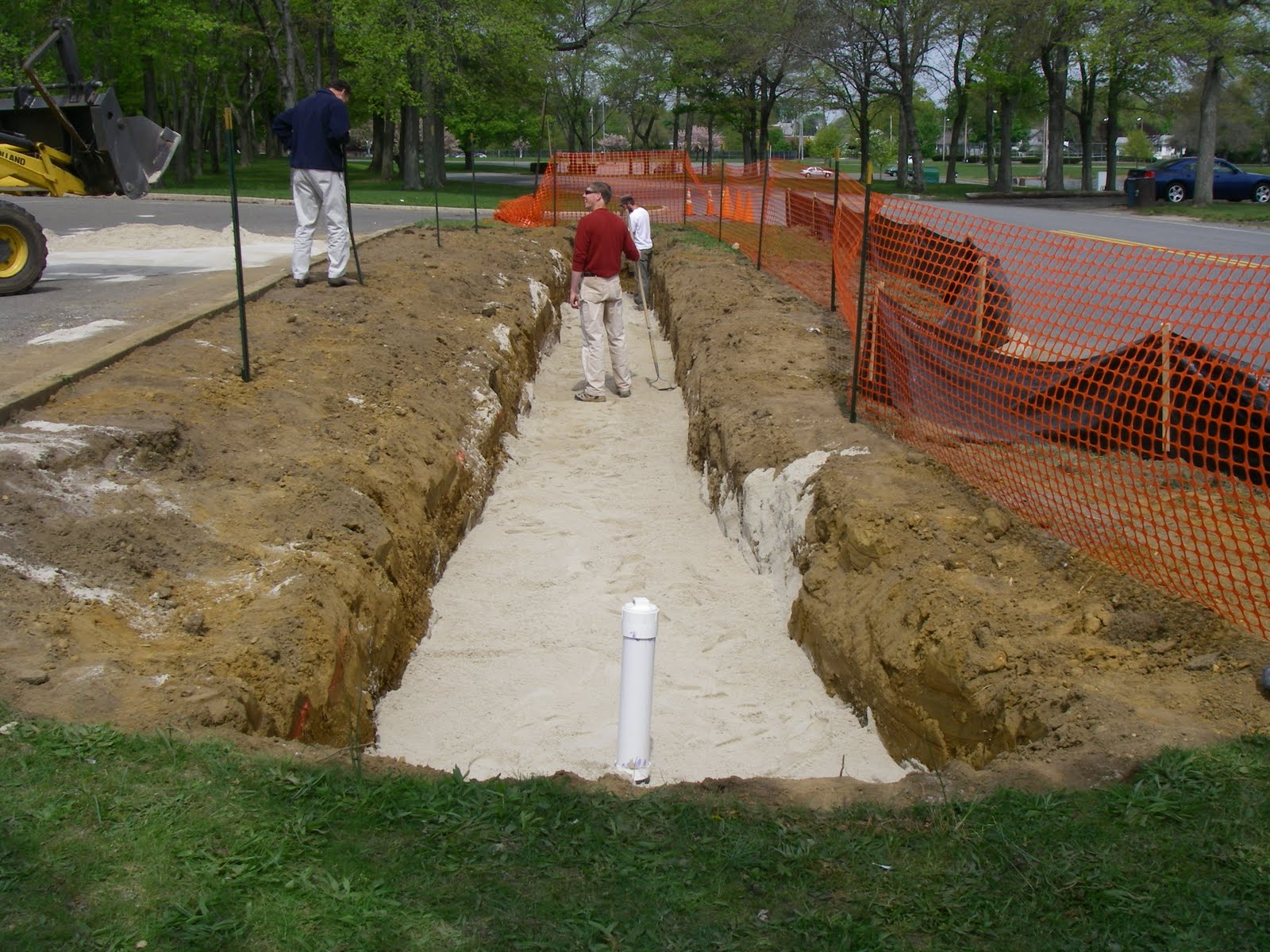
On Tuesday, April 27th, a rain garden was installed in Thompson Park (Jamesburg/Monroe Twp), as part of the Manalapan Brook Watershed Protection and Restoration Plan. The garden was planted by 'students' of the Rutgers Rain Garden Certification Workshop.

The rain stayed away, and we ended out having some sun for our planting. Here are some photos of the garden and the planting event:


sand layer of rain garden during the week prior to planting


ready for the compost layer


volunteers planting the rain garden


finished rain garden, with soil erosion control blankets and geese deterrents.

This 1,300-square-foot rain garden, will treat nearly 13,000 square feet of parking lot at Thompson Park, before polluted water can run into the Manalapan Lake.

To read the full article or for more information: click here.

Tuesday, March 30, 2010

Monday, March 22, 2010

World Water Day

Today, we will look at water on a global scale because March 22 is World Water Day. This international observance grew out of the 1992 United Nations Conference on Environment and Development in Rio de Janeiro, Brazil.

This year's theme is "Clean Water for a Healthy World." About 396 trillion gallons of wastewater are produced each year. In developing nations, about 80 percent of that water goes untreated, and ends up waterways that people will use for drinking water supplies. This is as a result of a lack of regulations and resources.

All over the world, groups and schools are hosting events to raise awareness about water availability, sanitation, and hygiene.

Read more here.

Thursday, March 18, 2010

In the aftermath of the storm...

If you haven't heard yet, New Jersey was hit hard this past weekend by a nor'easter that brought 2-5 inches of rain in many areas. Work in the water resources field makes you look at storms in a different way. I sat at my house on Saturday evening and Sunday morning, looking at hydrographs on the internet, wondering how our restoration project sites are doing, and the other places that I have been to around the area.

Hydrographs show the discharge (think: the amount of water) of a stream vs. time. Here is an example of a hydrograph from the Mulhockaway Creek from this past weekend:


The peak of the hydrograph lags behind the peak in rainfall. Where the peak is on the hydrograph (compared to the peak in rainfall), and how long the peak lasts depends on the characteristics of the watershed and the stream itself(some of which may include: slope, soil type, streambed sediment size, etc).

Hydrographs for streams that have United States Geological Survey (USGS) gauges can easily be found. If you are any of our project areas (Raritan Basin, Delaware & Raritan Canal, Manasquan), you can look up the USGS pages through our website.

If you are interested in other areas around the country, you can visit this USGS page and find your stream or river of interest by state.

So aside from spending time looking at hydrographs, I mentioned that we're interested in looking at our restoration site. Below is a video, recorded by our very own Rick Anthes, on Monday afternoon (3/15) at Hoffman Park in Union Township, NJ on the Mulhockaway (learn more about the Mulhockaway project here). The area he is focused on is the floodplain interceptor, which is used to slow down water before it enters the stream during high-flow events. Hoffman Park's stream restoration took place in the summer of 2006.
Friday, March 12, 2010

Photo of the Week!


Wickecheoke Creek, March 10, 2010
Photo by H. Barrett

The section of streambank that I'm standing on to take this picture is actually gabions, which were put into place as the streambank was eroding and had the potential to destroy the road.

Friday, February 26, 2010

To salt, or not to salt....

In the wake of yet another snow storm for Central Jersey, I feel constantly bombarded with road salt. I drive 33 miles to work each direction every day, so I want the roads to be clear and safe for my drive to work (or wherever else I need to go that day). I can't help but feel torn though, as I work in water resources, and I think about the other implications of road salt (not just the safer roads and high costs to municipalities and NJDOT). I'm talking about the waterways.

If you've ever been swimming in the ocean, you know that a mouthful of seawater does not taste good. There are plenty of aquatic organisms, including fish, that face this every time we get a snow storm and use road salt. These salty freshwater bodies won't have the same 35 parts per million concentration at ocean water, but it is enough to make a difference. Salty streams, rivers, and lakes can lead to contaminated groundwater (affecting wells), and also can affect public water supplies.

When I was a NJ Watershed Ambassador, I conducted one of my visual and biological assessments on the Peters Brook in Somerville just one day after a snow storm. We use macroinvertebrates (read: aquatic bugs) as indicators of stream health. The Peters Brook does not usually score well in this area for many reasons (urbanization, lots of impervious cover, etc). On this particular day in December 2008, I had found mostly tolerant species, meaning that they can handle some water pollution, but I had also come across a few sensitive species--meaning that they can handle a bit of water pollution, but not as much as the tolerant species (I found no intolerant species--which can handle little to no pollution at all). The odd thing was that the sensitive species, the sowbugs, were all dead. I've never had an entire group of macros be dead upon sampling before. The only explanation is that the roads had just been salted, and the snow melted enough to send some of that salt into the Peters Brook, which killed the sowbugs.

Safety is of the utmost concern, so make sure that your driveways, walkways and roadways are clear and safe. There are alternatives out there that have less of an effect on the environment. Calcium chloride and magnesium chloride are the most popular alternatives, which usually require less amount per area of application than traditional sodium chloride and they work at lower temperatures; however, they are often more expensive.

Check out more information on road salt from the Salt Institute or this article from the Star Ledger from Feb 15th.

Tuesday, February 16, 2010

Freshwater Fish Trivia!

It has been a very long time since I have updated the blog (and I have missed several weeks for the Photo of the Week).

While I work on finding a good photo by the end of this week, Ken gave me some freshwater fishing trivia questions!

1. Which type of Sunfish is common to all 50 states?
a. Pumpkinseeds
b. Bluegills
c. Redears

2. Rainbow trout are originally from what region of the US?
a. Pacific Coast
b. South West
c. North East

3. Which is not a typical food for a Largemouth bass?
a. Crayfish
b. Frogs
c. Bats

4. The world record Muskellunge with a weight of 69 lbs 11 oz was caught in which state?
a. Maine
b. Ohio
c. Wisconsin

5. Trolling would not be used on which body of water?
a. Lake
b. Stream
c. River

Good luck!

Answers are posted in the comments section!